
Beneath a Veil of Patina
Rain trickled down from the edges of the roof in a peculiarly swift motion. Yet, each drop was distinct.
I wasn’t sure if it was my mother’s wrath or the lightning & thunder (practically they are of the same nature) that summoned my brother to our door that hour, but he rushed inside like a soggy raisin from playing football in the rain - shrivelled fingers, muddy knees, a pair of boots fighting to remember their real colour and all.
I sat at the dining table to peel some oranges. But the wrathful mother returned. Just a cutting look was enough for me to understand that she didn’t want the table runner to be stained by the oranges. I removed the already stained runner, gave her a wide smile, and I moved to the verandah.
There was no clean way to do it. The peel comes off in many scraps, and you end up with stained and sticky fingers. It shouldn’t make you think. But here I was, reeling in the delicate pulp and the stubborn citrusy scent on my fingers. I was being schooled to be comfortable with imperfection.

But I wondered how my Achamma did it with so much ease and precision. She needed us grandchildren to be fed every breathing minute. She’d either bring some snacks or some peeled bananas, oranges and apples cut into cubes, so that we can’t say no as they are already peeled or cut.

As the weather called for a quick reading session, I poured myself some chaya and headed to the storage room upstairs that housed Achan’s books. I was trying to find his copy of Midnight’s Children. I rummaged through the shelf but found a pile of Amar Chitra Kathas, a stack of cartoon CDs, … and an old vettila chellam (betel box) instead.
When I lifted the lid of the patina-covered heirloom, its adamant hinges complained. Weakened notes of oud escaped into the room like a trembling tune from a broken music box. It was a forgotten realm of attar vials. It felt as if I was disrupting a conveniently beautiful slumber. Hence, I let the vials be and slowly moved forward.
Above the shelf lay more books in a petite wooden trunk box, and my search for Rushdie’s words in that direction uncovered something unexpected—Amma’s harmonium from her school days. I had hoped to find life in its keys. Instead, I found some stuck and silent reeds, missing keys, and tired and bent spring wires.

The harmonium sat in a loud, cynical silence, sulking from years of disregard. I did not know how to console her. The cold shoulder pushed me back to the trunk.
Inside lay a hardcover book pressing some sunflower petals and stems of baby’s breath, both partially dried, preserved like a creased letter destined for another life. Buried under a maroon sweater was a lifeless Yashica MF-2 camera with a broken flash being the least of its concerns.
My chaya was just as cold as my search for the book. The faint condensation ring on the table was a silent testament to time slipping away. I walked out of that room without my Midnight’s Children.
Outside, a few photos from my DIY gallery wall had fallen. The tape had lost its glue.
A portrait of Maggie Cheung from In the Mood for Love,
print of a Joyeeta Joy painting,
And a poster of Satyajit Ray’s Mahanagar.
I put them back where they belonged, one by one, while the Sun came in for a kiss and meandered away, caressing them.
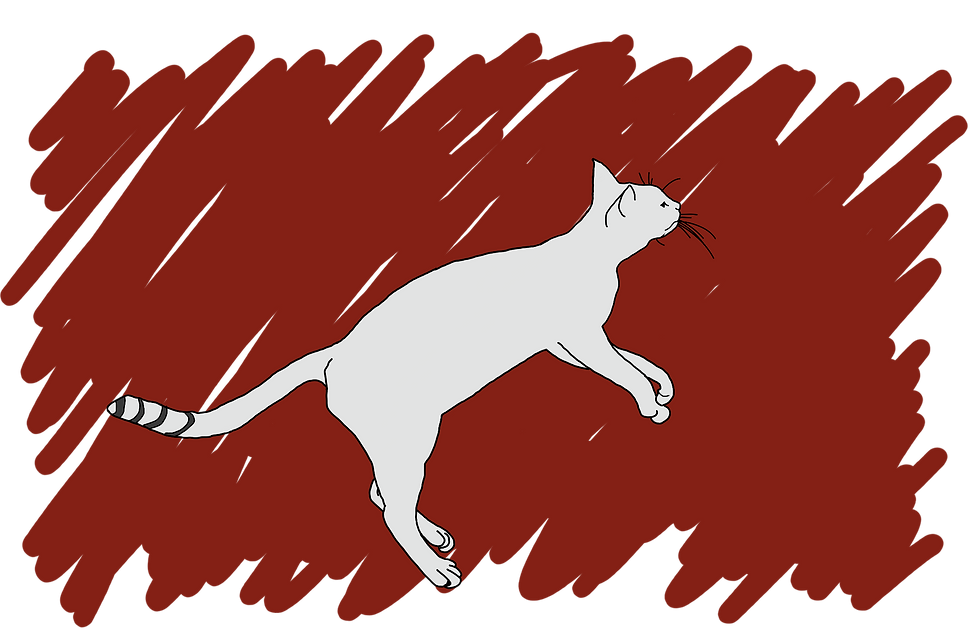
The rain showed no signs of stopping. Hours melted away like a soggy paper boat in a puddle. The window glass was fogged enough to be made into a canvas for my drawings. As I moved to the verandah again, I stumbled into Yashoda, my stray-pet cat, lounging on the red granite floor, kneading imaginary dough, to the pitter-patter of the rain. We could say she was making biscuits. And in her company, I made doodles on each cloudy rectangle of the window.
A voice cut through the stained mirror of quiet: “Kanna, Amma poyi varaam” (Kanna, Amma will be back). She said it with a child-like joy gushing over as she left for her dance class, with an ardour quite seditious—fashioned, I imagine, from her pair of Chilanka (ghungroo).
I remember waiting for her backstage with Ammumma to cheer for her and take pictures, with shared pride. It was tradition. Now, I wait at the forefront, feeling the shards of lull she leaves behind, each twirling to her thaalam (taal).
Trying to waste my time, moving aimlessly around the house, I noticed her collection of kuppivala (glass bangles) tucked away in a corner on a wooden bangle stand. I approached them with utmost delight and caution. I rearranged them by colour and even tried a few on. But my enthusiasm cost me three—two sky blue and a parrot green.
“Better if this stays between us” - I whisper to the cracked bangles as I put them back on the branches of the stand and flee the scene like a puppy guilty of chewing up your favourite pair of shoes.
The blue in the sky deepens as I sit with my sewing kit, stitching the remnants of the day into the quilt. Each find is a patch. One square, one stitch at a time.
In a world moving faster than a parting lover’s heartbeat, if you listen closely, everything’s trying to have a conversation. It is as organic as the intimacy of being in someone else’s presence—each lost in their own world, yet connected by the subtle comfort of their silence, like the overlapping circles of a Venn diagram.
The subtle, sweet nectar of the banana blossom flowers carries you back to the plantain field in the backyard of your Tharavaad (ancestral home).
A flutter of joy lingers in the cold red-oxide floors of your Ammumma’s place.
The stack of newspapers on the rusted, cane-woven metal chair is dusty from love.
Summers see cousins dragging chairs towards the mango trees, eager to climb up and pluck the fruit themselves, and being careful not to let the sap’s acid burn their skin.
The Hyderabadi pearls in the blue velvet pouch, unstrung and untouched, wait for their turn, holding unfulfilled promises.
You might walk through another city and find star jasmines creeping up street walls, but you are carried back to your living room in Kerala, where Amma has left ten-petal jasmines and yellow champacas to float in a water bowl.
The Ordinary - it merely asks to be seen. All of them treasured time capsules of a forgotten lullaby.
Material things are but a guise; placeholders for all that is intangible. What are we mortals if not for our ability to see the unnoticed, feel the ignored and hold dear the fleeting? Silence led me today, and I followed—towards the tune this house hums, through an alchemy of the ordinary I never knew I needed. A tale reimagined.


Comments